TestSnag
Docs Videos Changelog
⌘K
Log in Start free
Video home

Getting started

  • Setting up your workspace
  • Reading your dashboard
  • Creating your first test
  • Running a test and watching it live

Building tests

  • Recording with the Cloud Recorder
  • Editing steps and fixing a selector
  • Adding assertions
  • Building steps with the AI panel
  • Test settings, end to end
  • Sharing and importing tests

Test types

  • Building API tests
  • Building SEO tests
  • Testing an iOS or Android build

Reusable building blocks

  • Reusing steps with blocks
  • Custom scripts
  • Variables and secrets
  • Managing files

Running tests

  • Triaging a failed run
  • Watching a run recording
  • Runs and history
  • Scheduling automated tests
  • Building test suites
  • Triggering tests with webhooks
  • Reading analytics

Notifications and integrations

  • Connecting Slack and other integrations
  • Email reports and dashboard health
  • Outbound webhooks
  • Filing failures into your issue tracker

Workspace and account

  • Workspaces and roles
  • Billing, plans, and usage

Notifications and integrations

Outbound webhooks

Free plan and above

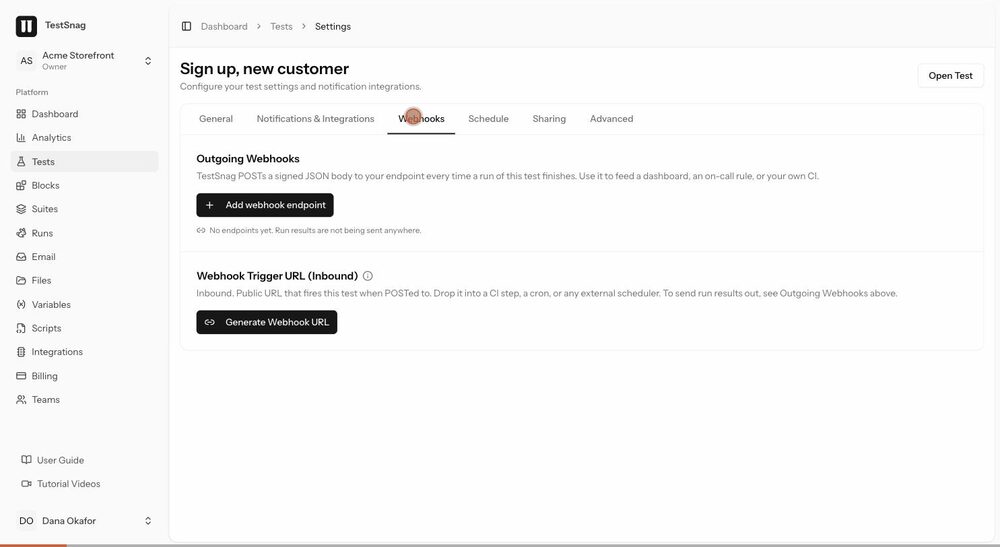
Push every run result to your own endpoint so Testsnag can feed a status page, a dashboard, or an incident tool.
Outbound webhooks preview 0:18

What this covers

  1. 1Register an endpoint to receive run events
  2. 2Choose which events it should receive
  3. 3Inspect a delivery and its response
  4. 4Retry a delivery that failed

Read it instead

The guide covers the same ground in writing, with more detail on the edge cases.

Open the guide article
Notifications and integrationsEmail reports and dashboard healthNotifications and integrations Filing failures into your issue tracker

© 2026 TestSnag

HomeFeaturesPricingChangelogSupport